English| EUR
Suggested for you
More currencies
Choose a language
Tenerife's canyoning scene centers on the Teno Rural Park, where volcanic gorges cut through ancient basalt formations and laurel forest. The terrain is technical, the descents are multi-hour, and every route requires a certified guide. This page covers the top gorges, what distinguishes each, and how to prepare for a safe and rewarding experience.
Quick answer
The best canyoning in Tenerife is found in Teno Rural Park, where guided descents navigate volcanic gorges with rappels up to 30 meters, natural water slides, and scrambles through laurel forest. Entry to the canyons is free, but all routes require a certified guide for safety and access. The optimal arrival window is 09:00–10:00, allowing full daylight for the descent and cooler conditions in exposed sections.
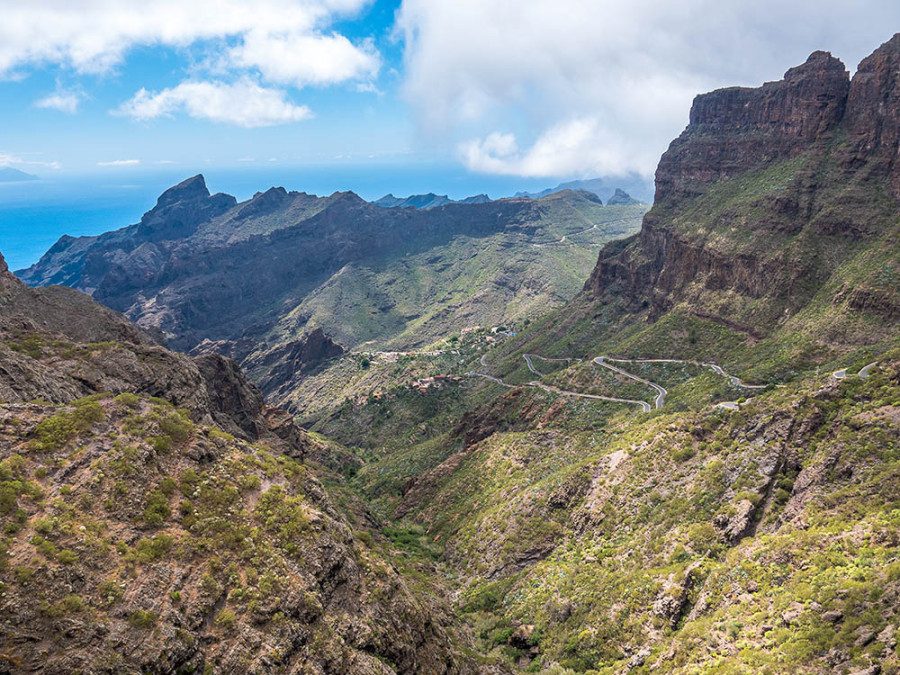
Tenerife's northwest corner holds the island's most dramatic canyoning terrain, a labyrinth of volcanic gorges carved by centuries of runoff into the basalt shield of Teno Rural Park. The rock is dark, fractured, and holds water year-round in shaded pockets, creating a descent environment that combines rappelling, scrambling, swimming, and route-finding through a landscape that shifts from open sun to dense laurel canopy within a single pitch. The park's gorges are not recreational trails. They are technical descents that demand rope work, anchor assessment, and the ability to read water flow in narrow sections where a sudden surge can block retreat. For this reason, every canyon in Teno requires a certified guide. The best canyoning Tenerife offers is accessed only through operators who hold permits, know the anchor points, and carry the gear required for safe descent and emergency extraction. Independent entry is prohibited, and enforcement is strict. The most frequently descended routes include Barranco de Masca, a six-hour journey that begins at 600 meters elevation and drops through tight corridors to the Atlantic coast, and Barranco del Infierno, a shorter but more vertical descent with rappels that exceed 20 meters. Both demand fitness, comfort with exposure, and the ability to move efficiently on wet rock. Water temperature in the pools hovers between 14 and 18 degrees Celsius, even in summer, and immersion is unavoidable. What sets Tenerife's canyoning apart from mainland European routes is the volcanic geology. The basalt is abrasive, holds minimal vegetation on vertical faces, and forms sharp-edged features that require deliberate hand placement. The rock also absorbs heat in exposed sections, making early starts essential. Guides recommend arrival between 09:00 and 10:00, when morning light illuminates anchor points and temperatures remain manageable in the lower gorge. Routes are graded using the international canyoning scale, with most Teno descents falling between 3V3A3III and 4V4A4IV—moderate to difficult, with vertical sections, aquatic passages, and commitment levels that prohibit easy exit once the descent begins. Participants should be comfortable with heights, cold water immersion, and multi-hour exertion in remote terrain. The reward is access to landscapes invisible from the road: hanging gardens of Canary laurel, fossil lava tubes exposed in the canyon walls, and water-sculpted basins that have never seen direct sunlight.
“The basalt is abrasive, holds minimal vegetation on vertical faces, and forms sharp-edged features that require deliberate hand placement.”
The optimal arrival window for canyoning in Tenerife is 09:00–10:00 to maximize daylight for long descents and minimize heat exposure. Seasonal conditions are most favorable during the drier months when water levels are manageable and mountain trails remain accessible.
Mild 18°C–22°C; stable conditions.
Ideal weather for technical descents and hiking.
Warm 23°C–28°C; high UV.
Requires early starts to avoid peak heat.
Pleasant 20°C–25°C; occasional rain.
Water levels begin to recover after summer.
Cool 15°C–20°C; potential mountain rain.
Higher precipitation increases canyon water flow intensity.
—
Ensures sufficient daylight for full-day excursions.
Verdict: The best period for canyoning is from April to June or September to October, arriving consistently between 09:00–10:00 for the safest conditions.
Access to canyoning locations in Teno Rural Park is technically free of charge. However, professional guided tours are mandatory for ensuring safety and managing environmental access requirements.
Verdict: While the canyons themselves cost 0 EUR, visitors must pay for professional guide services to ensure safe and compliant access.
Canyoning locations are situated within Teno Rural Park, Tenerife, Canary Islands, Spain. Accessing these remote areas typically requires a private vehicle, as public transport options do not reach the specific descent entry points.
TF-436 road to Teno Rural Park
Line 369 to Teno Rural Park area
Vehicle access to specific sectors of the park is often restricted or regulated. Visitors are advised to coordinate transport with professional guides to navigate these limitations and reach the trailheads effectively.
Canyoning in Tenerife's volcanic gorges requires certified guides, specialized safety equipment, and moderate fitness.
Canyoning in Teno Rural Park requires strict adherence to guide instructions and environmental regulations. Safety protocols and conservation rules are enforced to protect both participants and the fragile canyon ecosystems.
Everything you need to know about best canyoning tenerife
The best canyoning tenerife experience combines challenging rappels, natural water slides, and deep pools within the Teno Rural Park. High-quality excursions prioritize safety protocols and professional equipment to navigate these volcanic formations. Experienced local guides ensure you reach the most scenic spots while managing the technical aspects of the descent. Selecting a reputable operator helps you discover the best canyoning tenerife has to offer safely.
Access to the canyons themselves is 0 EUR, as they are public natural areas. However, guided tours are required for safety and access to ensure you have proper insurance and qualified instructors. These professional services manage the logistical requirements for your excursion, allowing you to focus on the descent. Always book through verified providers to guarantee the best canyoning tenerife safety standards.
The best arrival window is 09:00–10:00 to ensure optimal daylight for multi-hour descents. Starting early helps you avoid the peak heat in exposed terrain and provides enough time for a thorough safety briefing. Planning your travel to Teno Rural Park within this timeframe is essential for a successful trip. This timing is a key factor when looking for the best canyoning tenerife opportunities.
While some routes are beginner-friendly, guided tours for the best canyoning tenerife require a basic level of physical fitness and comfort with heights. Guides will provide a mandatory briefing on rappelling techniques and water safety before you start. They determine if specific routes are suitable for your skill level based on current conditions. Do not attempt technical descents without professional instruction.
Many operators offer family-friendly descents, but age and weight restrictions typically apply for safety reasons. It is important to confirm these requirements with your chosen guide before booking. They will assess whether the chosen route matches the capabilities of younger participants. Always prioritize professional oversight when canyoning with minors.
You should come prepared with sturdy footwear, swimwear, and a towel for your descent. Professional guides provide essential safety gear such as helmets, harnesses, and wetsuits as part of the tour package. Ensure you have adequate hydration and sun protection for the approach and return hikes. Check with your tour operator for any additional equipment lists specific to your scheduled route.